Blog posts

2024

PySwarms - Open Source Software Contribution

1 minute read

Published:

To learn more about collaborative development with version control systems as well as contributing to open source projects on GitHub, I made two contributions to the PySwarms project. PySwarms is a Python module for particle swarm optimization research.
2022

2021

A Newbie’s Guide to Open Source Software Contributions

9 minute read

Published:

We all use open source software. Every time you take out your smartphone and connect to the internet you’re executing open source code, at every level from the kernel in your device’s operating system to the front end code your browser is rendering. Open source software is a powerful resource and a major driving force behind humanity’s rapid development of technology.

A Newbie’s Guide to Open Source Software Contributions

9 minute read

Published:

We all use open source software. Every time you take out your smartphone and connect to the internet you’re executing open source code, at every level from the kernel in your device’s operating system to the front end code your browser is rendering. Open source software is a powerful resource and a major driving force behind humanity’s rapid development of technology.

2020

Galaxy Zoo Challenge - Image Classification with PyTorch

24 minute read

Published:

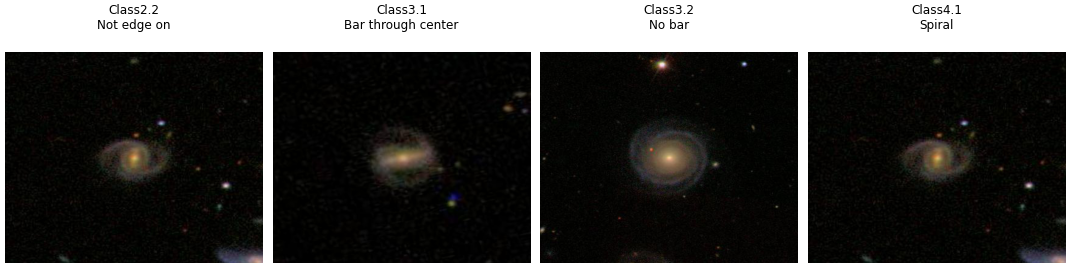
This is an image classification project that I completed for my independent study at Old Dominion University. The dataset was obtained from Kaggle’s Galaxy Zoo Challenge. I chose astronomy datasets for my independent study because I enjoy learning about the topic and they presented an opportunity to sharpen my deep learning and PyTorch skills.

PLAsTiCC Astronomical Classification - Light Curve Sequence Analysis

20 minute read

Published:

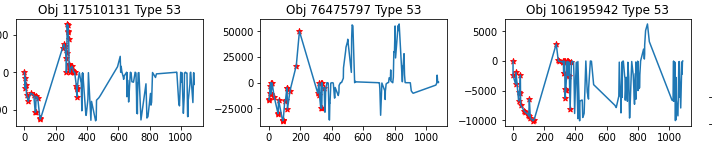
This is a sequence analysis project that I completed for my independent study at Old Dominion University. I used the open source dataset from Kaggle’s PLAsTiCC Astronomical Classification Challenge. In the project I analyzed light curves, engineered over a hundred metadata features, and built a LightGBM model to predict the object classes.

Toxic Comment Classification - Natural Language Processing

35 minute read

Published:

I performed a detailed analysis of Wikipedia comments and built a model that classifies them as toxic or nontoxic. The final model is a support vector machine that uses a Naive Bayes feature weight transformer to improve performance. The data was obtained from Kaggle.